Congratulations to CPC Fellow Miyuki Hino for receiving a 2026 Phillip and Ruth Hettleman Prize for Artistic and Scholarly Achievement!
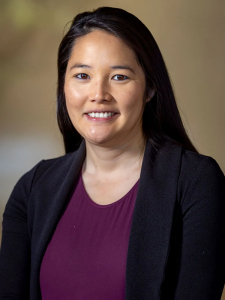 CPC Fellow and Associate Professor Miyuki Hino was awarded a 2026 Phillip and Ruth Hettleman Prize for Artistic and Scholarly Achievement.
Dr. Hino is an associate professor in the Department of City and Regional Planning and an adjunct assistant professor in the Environment, Ecology, and Energy Program at the University of North Carolina at Chapel Hill. She studies how communities experience and respond to environmental change, with a particular focus on hazards like coastal flooding, extreme heat, and wildfire. Her work connects the physical science of climate hazards with the economic, social, and policy systems that shape how those risks are distributed. Drawing on methods from geospatial analysis, economics, and environmental science, she examines how climate risks influence housing markets, migration patterns, and land-use decisions.
A major contribution of Hino’s research is her reframing of climate hazards from rare disasters to chronic, recurring events that gradually reshape communities over time. To study these patterns, she integrates diverse datasets — from environmental sensors and satellite imagery to property records and demographic data — to measure climate exposure with new precision. One revelation from her work is that “sunny day” flooding occurs more frequently than previously recognized, and that newly available climate risk information can influence property values and decision-making in housing markets.
Hino’s research is transforming how policymakers, planners, and researchers understand climate adaptation by highlighting the cumulative effects of everyday environmental stressors and the social systems that shape vulnerability. Her findings have informed national and state-level policy discussions, contributed to the U.S. National Climate Assessment, and reached broad public audiences through major media outlets. By providing actionable evidence on how climate risks unfold and how communities respond, her work is helping guide more effective and fair climate resilience strategies.