CPC at 60: Elizabeth Frankenberg’s Commitment to Population Health and the Next Generation of Researchers
By Grayson Mendenhall
gkm4unc@email.unc.edu
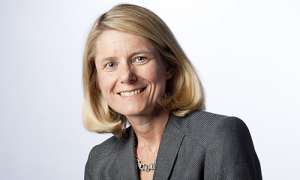 As the Carolina Population Center celebrates 60 years, former director Elizabeth Frankenberg reflects on the power of interdisciplinary research, the importance of supporting emerging scholars and the Center’s evolving role in understanding population health.
When a natural disaster strikes, its consequences can extend far beyond the immediate destruction. Communities face challenges that can reshape their health, livelihoods and well-being for years to come. Understanding how people respond to those challenges, and what helps them recover, has been a central focus of Elizabeth Frankenberg’s research career.
A professor in the Department of Sociology at UNC-Chapel Hill, Frankenberg is a Faculty Fellow and former director of the Carolina Population Center (CPC), as well as director of the Carolina Center for Population Aging and Health (CCPAH). Her research examines how populations are affected by and recover from major disruptions, particularly natural disasters.
Much of her work has focused on Indonesia, where she has spent years studying the long-term consequences of the 2004 Indian Ocean tsunami. More recently, she has explored how lessons from that research might help illuminate the experiences of communities in eastern North Carolina following Hurricanes Florence and Dorian.
For Frankenberg, understanding how disasters shape people’s lives requires more than examining the events themselves. It means considering the social, economic and environmental circumstances that influence people’s ability to recover.
As CPC celebrates its 60th anniversary in 2026, her work and leadership reflect the Center’s longstanding commitment to bringing researchers together to address complex questions about population health and well-being.
Finding an Intellectual Home at CPC
Frankenberg joined CPC in 2017 after serving on the faculty at Duke University. She was drawn by the opportunity to lead one of the country’s prominent population research centers and become part of a larger community of demographers and social scientists.
She served as CPC director for five years, helping guide the Center through a period of growth and expanding research opportunities.
“CPC is just a very vibrant and warm intellectual community,” she said. “There are a lot of people here who work on interesting topics. Some of them are closely related to what I do. Others are less related. But you can always find people to talk to about stuff, get advice from them.”
The Center’s established expertise in international research was another major attraction.
At the time, Frankenberg was managing grants supporting survey research in Indonesia. CPC’s long history of coordinating international projects made it an ideal environment for that work.
International research can involve complicated logistics, including coordinating with overseas partners, managing subcontracts and navigating different administrative systems. At CPC, Frankenberg found those challenges were familiar territory.
“There’s a long tradition of supporting international projects,” she said. “There’s a lot of experience, and they’re not looked on as just this kind of random one-off thing that’s strange. They’re just woven into the day-to-day business operations really seamlessly here.”
That expertise has also supported her research closer to home.
From Indonesia to North Carolina
When Frankenberg began developing a pilot study examining the aftermath of Hurricanes Florence and Dorian in eastern North Carolina, she drew on lessons from her longstanding research on the Indian Ocean tsunami.
Although the project was relatively small, it required extensive coordination to collect reliable survey data.
CPC staff helped recruit interviewers, configure laptops and software, establish systems for transferring data, coordinate participant gift cards and manage the many logistical details necessary for successful fieldwork.
“CPC was just incredibly helpful on all sorts of dimensions,” Frankenberg said.
She particularly appreciated the willingness of staff to embrace the project, regardless of its size.
“They really embraced it as an endeavor,” she said. “They wanted to help [it] succeed.”
For Frankenberg, this kind of support is fundamental to producing high-quality research. By providing the technical and administrative infrastructure needed to carry out complex studies, CPC allows researchers to concentrate on the scientific questions driving their work.
Expanding CPC’s Reach into Aging Research
During Frankenberg’s tenure as director, CPC continued to grow, welcoming researchers from an increasingly diverse range of disciplines, including city and regional planning, social work and psychology.
One particularly significant development was the establishment of the Carolina Center for Population Aging and Health in 2021.
Frankenberg helped lead the effort to secure National Institutes of Health funding for the new center, which works alongside CPC to advance research on aging and population health.
The timing reflected growing opportunities to investigate how experiences throughout people’s lives influence their health and well-being as they age.
“We were starting to think about whether we could be competitive for an aging center,” Frankenberg recalled. “We put [an application for a new center] together, and we were thrilled when we ended up getting some funding.”
The center provides resources that help researchers pursue new ideas, particularly through pilot project funding that can lay the groundwork for larger studies – and make applications for external funding to support those larger studies much more competitive.
It also supports seminars and visits from scientists at other universities, creating opportunities for collaboration and intellectual exchange.
“We’re able to encourage young investigators especially, but also senior investigators, if they want to try to get some new work going that might turn into a grant down the road,” Frankenberg said.
For CPC, the aging center represents an expansion of its longstanding mission, strengthening the connections between population research and questions about health across the life course.
Stronger Research Through Collaboration
Frankenberg believes some of the most important scientific advances emerge when researchers look beyond the boundaries of their own disciplines.
At CPC, she has found opportunities to collaborate with colleagues whose expertise complements her own.
She points to her work with infectious disease researcher Ross Boyce, who has studied communities affected by severe flooding in Africa. Frankenberg contributed her experience in disaster research to help develop survey questions examining the effects of flooding on local populations.
She has also collaborated with psychologist Margaret Sheridan on cognitive assessments used in her Indonesian research and connected with researchers studying hurricane storm surge along the North Carolina coast.
These collaborations illustrate the value of bringing different scientific perspectives to bear on shared questions.
“I continue to think the biggest problems are going to be solved more effectively with interdisciplinary research,” she said.
That perspective also shapes her understanding of the future of population science.
Improving health and well-being, she argues, requires understanding not only biology and psychology but also the social relationships, opportunities and environments that shape people’s lives.
“There’s a lot of demographic and sociological questions that contribute to health and well-being,” she said. “I don’t think those are going to go away.”
Investing in the Next Generation
For Frankenberg, CPC’s future depends in part on its ability to support emerging researchers.
She encourages early-career scholars to pursue questions they are passionate about while remaining flexible and open to new approaches.
Just as importantly, she advises them to build relationships across disciplines and with colleagues at similar stages of their careers.
Those connections can lead to future collaborations, shared publications, and valuable professional support.
Frankenberg has put that philosophy into practice through CPC’s proposal development activities, where experienced researchers help colleagues strengthen grant applications.
Her mentorship of CPC Faculty Fellow Kat Tumlinson offers one example. Alongside Robert Hummer, Frankenberg helped Tumlinson refine a major NIH proposal, sharing insights gained through years of experience developing externally funded research.
Frankenberg traces her own grant-writing expertise to her early career at RAND, where she benefited from the guidance of senior researchers.
Now, she sees helping others succeed as one of CPC’s greatest strengths.
“It’s really one of the great things about CPC, helping folks like Kat get their proposals in and hopefully help them get [the proposals] to the stage where they’re funded,” she said.
Looking Toward the Next 60 Years
As CPC celebrates six decades of advancing population research, Frankenberg sees a Center that continues to evolve while remaining grounded in the qualities that have long made it successful: intellectual curiosity, collaboration and a commitment to supporting researchers.
From international disaster research to new initiatives in population aging and health, CPC continues to provide a home for scholars working to understand the forces that shape people’s lives.
For Frankenberg, its importance extends beyond any single project or discipline.
“CPC has been an incredibly valuable entity for the university as a whole, but also for the researchers over the years who’ve been such an important part of it,” she said.
As the Center looks toward its next chapter, she hopes it will continue to provide the community, expertise and opportunities that have made it an essential part of UNC’s research landscape.
“I hope it continues to have a key role here,” she said.